Wind, recorded as form
One day of wind,
held in one form.
One place. One day. The wind that passed through it, kept as a form you can hold. Speed and direction, hour by hour, draw the silhouette. No two days are alike.
We are a young studio showing our first pieces. There is no online shop yet — every request is answered personally from info@windvase.org.
What it is
A vase whose geometry is generated from a real wind record — a place, a date, twenty-four hours of weather.
Why it exists
Because a day you remember deserves better than a photograph of it.
Where we are
First series complete, made in Germany. Pricing and availability are being defined — tell us what you would want and we will come back to you.
The idea
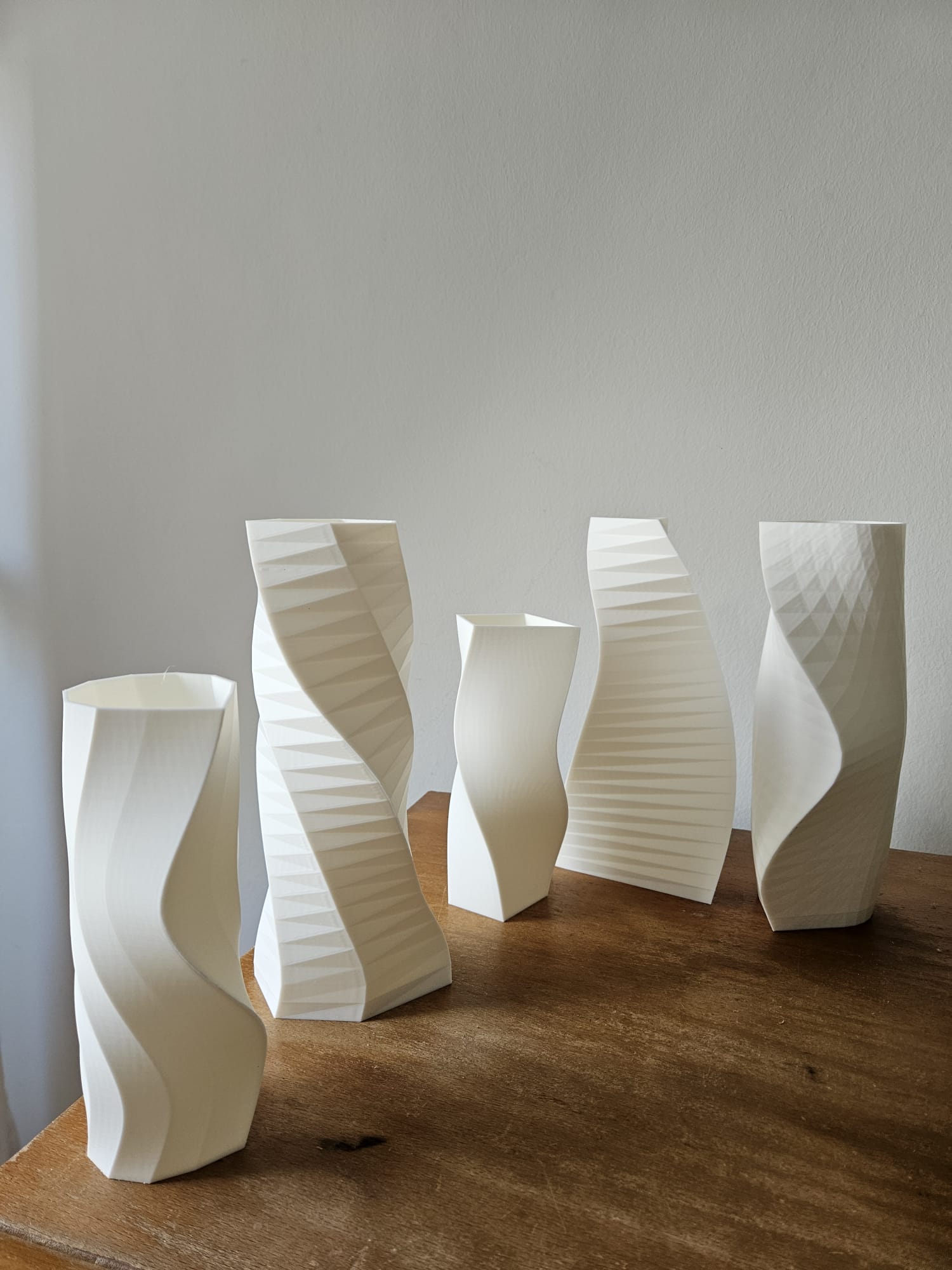
Wind can be felt and watched, but never kept. We translate its movement into a body you can hold — so a place, a day and the feeling of it stay in the room with you.
Nature
The wind supplies the original drawing. We do not invent the line.
Data
Speed and direction describe the course of a single day.
Algorithm
A parametric model turns the record into printable geometry.
Craft
Built layer by layer, then released by a person: every piece is checked by hand against its own record before it is signed off.
From record to silhouette
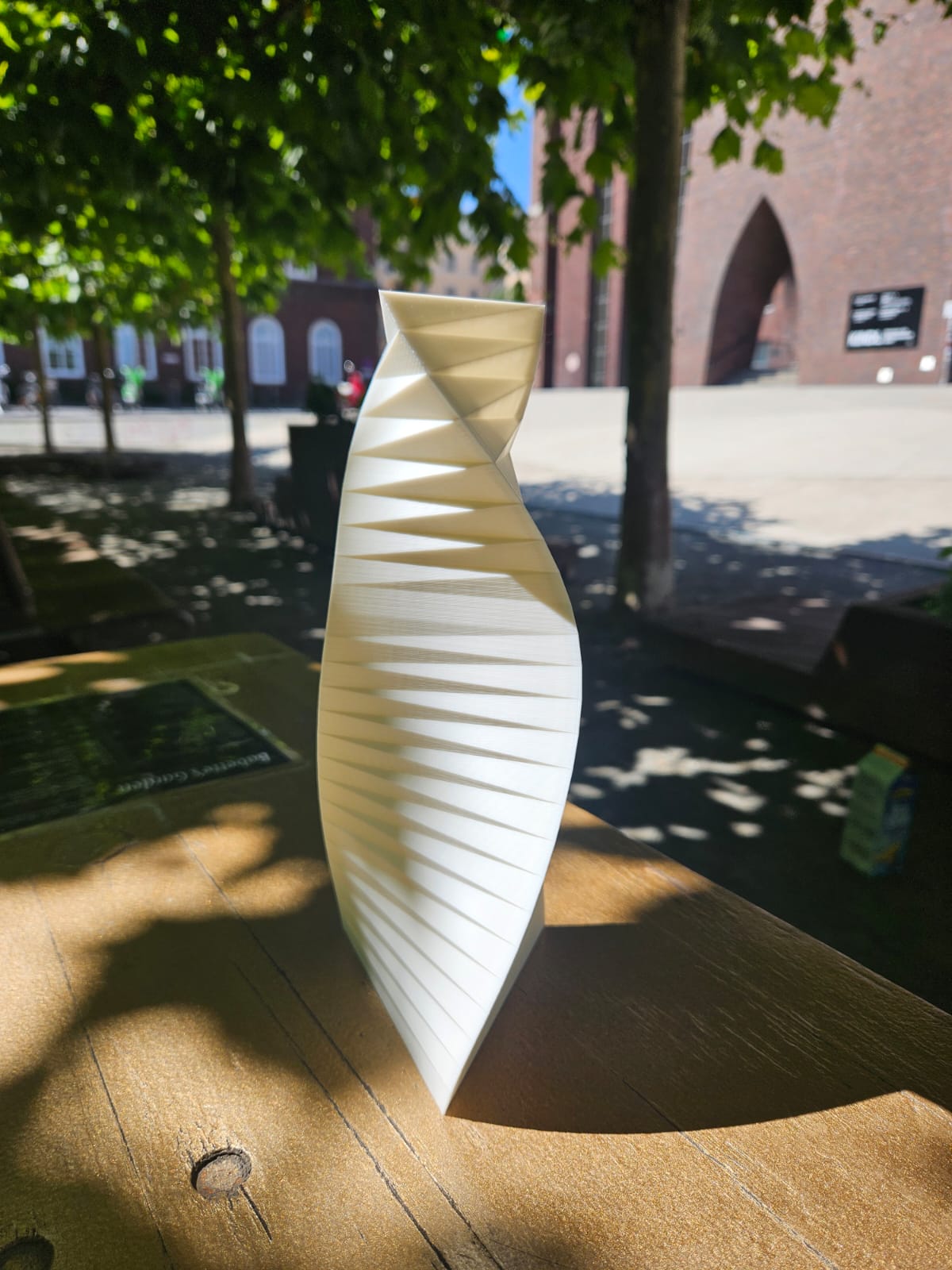
Two dimensions do the work: wind speed and wind direction. Speed sets how wide the body grows at that moment, direction rotates the layer. A calm morning gives a narrow, quiet base; an afternoon gale opens the shoulder, and a turning wind twists the whole profile. The vase reads from bottom to top, exactly like the day did.
How a piece comes about
Five steps, made on request
You name a place and a date that means something to you.
We look up the archived wind record for that place and day.
The model generates the geometry. You see the form before anything is made.
The piece is produced individually — no mould, no series, no stock.
A final check by hand — form against record, surface, base — then it is finished and sent with its record on paper.
Five days, five pieces
All records from the wind archive for Tempelhofer Feld, Berlin-Neukölln
Each of these pieces comes from a different day at the same place. We went looking for the days worth building — quiet ones, turning ones, stormy ones — to see what range the wind alone can produce. On top of that, the number of edges in the base can be set anywhere from three to twenty-seven, the surface can be smooth or structured, and the volume scaled. The wind decides the silhouette; these settings decide the character.
Three edges, structured surface
The fewest edges we build. Broad facets, hard shadows, and a strong twist reading up the body.
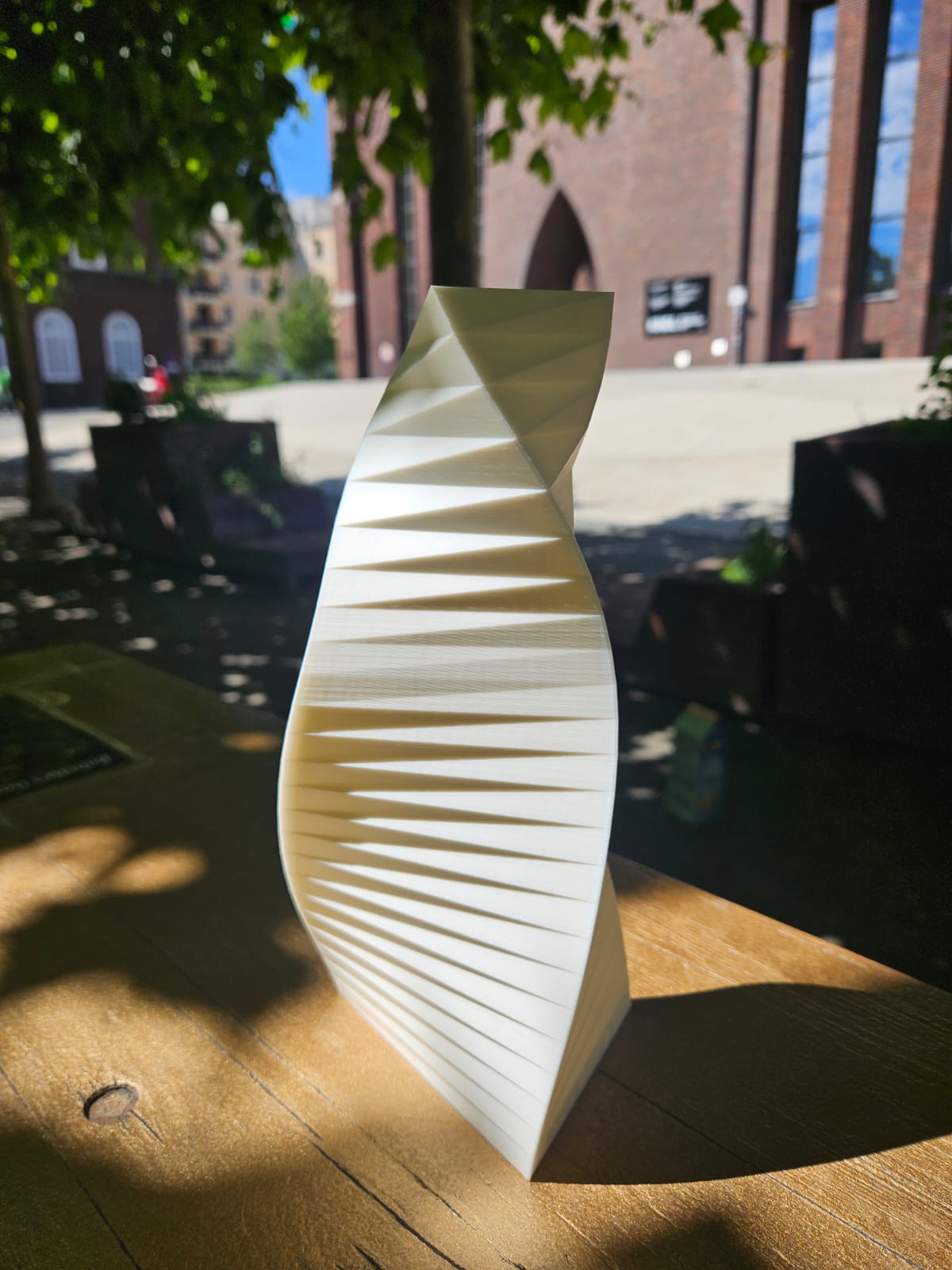
Another day, another triangle
Same base geometry, a different record: the lean and the rhythm of the folds change with the day.
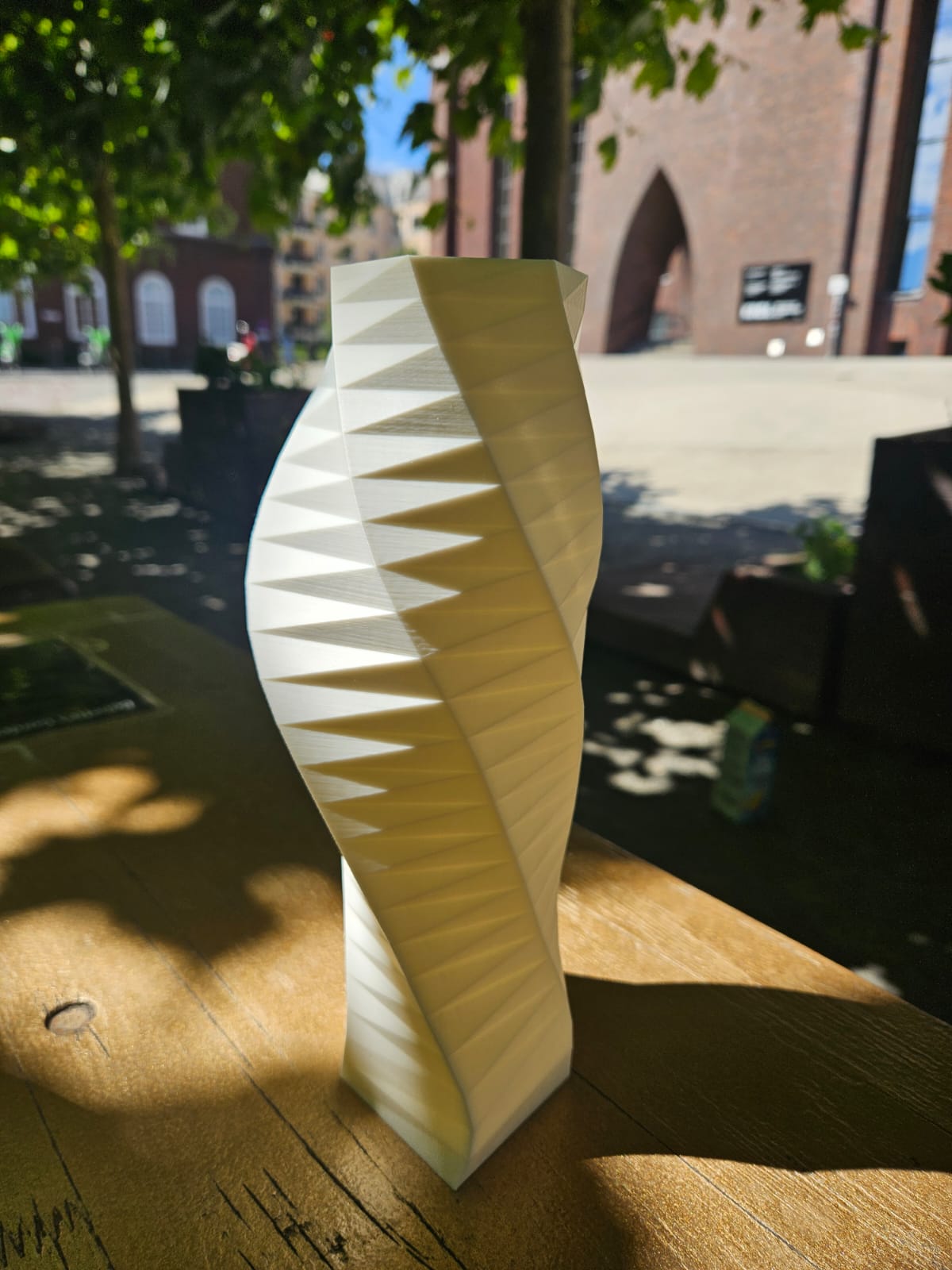
Six edges, structured surface
More edges means finer facets: the surface breaks into narrow bands that catch light in rows.
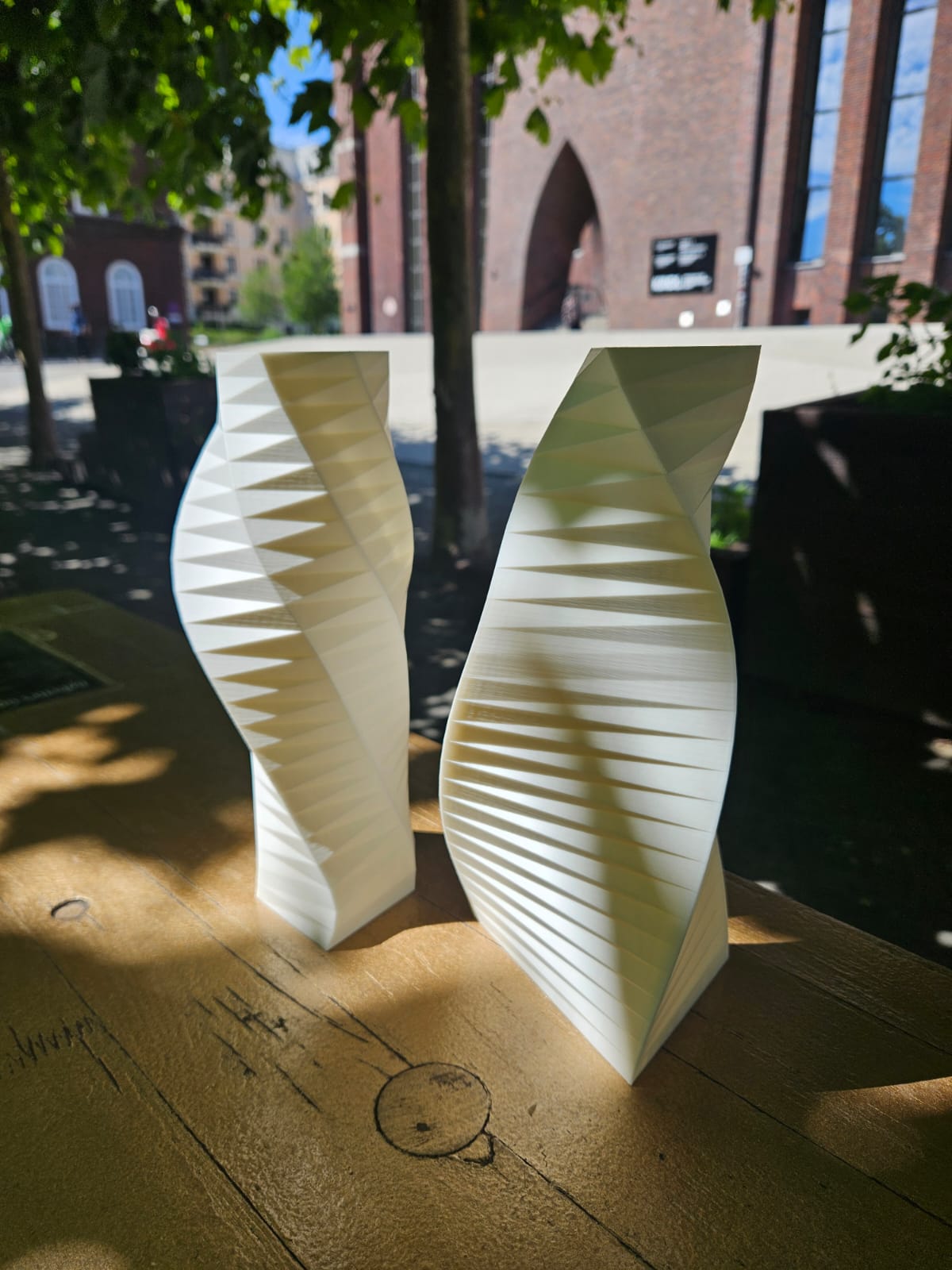
Two days beside each other
Two records, two edge counts. Set side by side, the difference between two days on the same field becomes obvious.
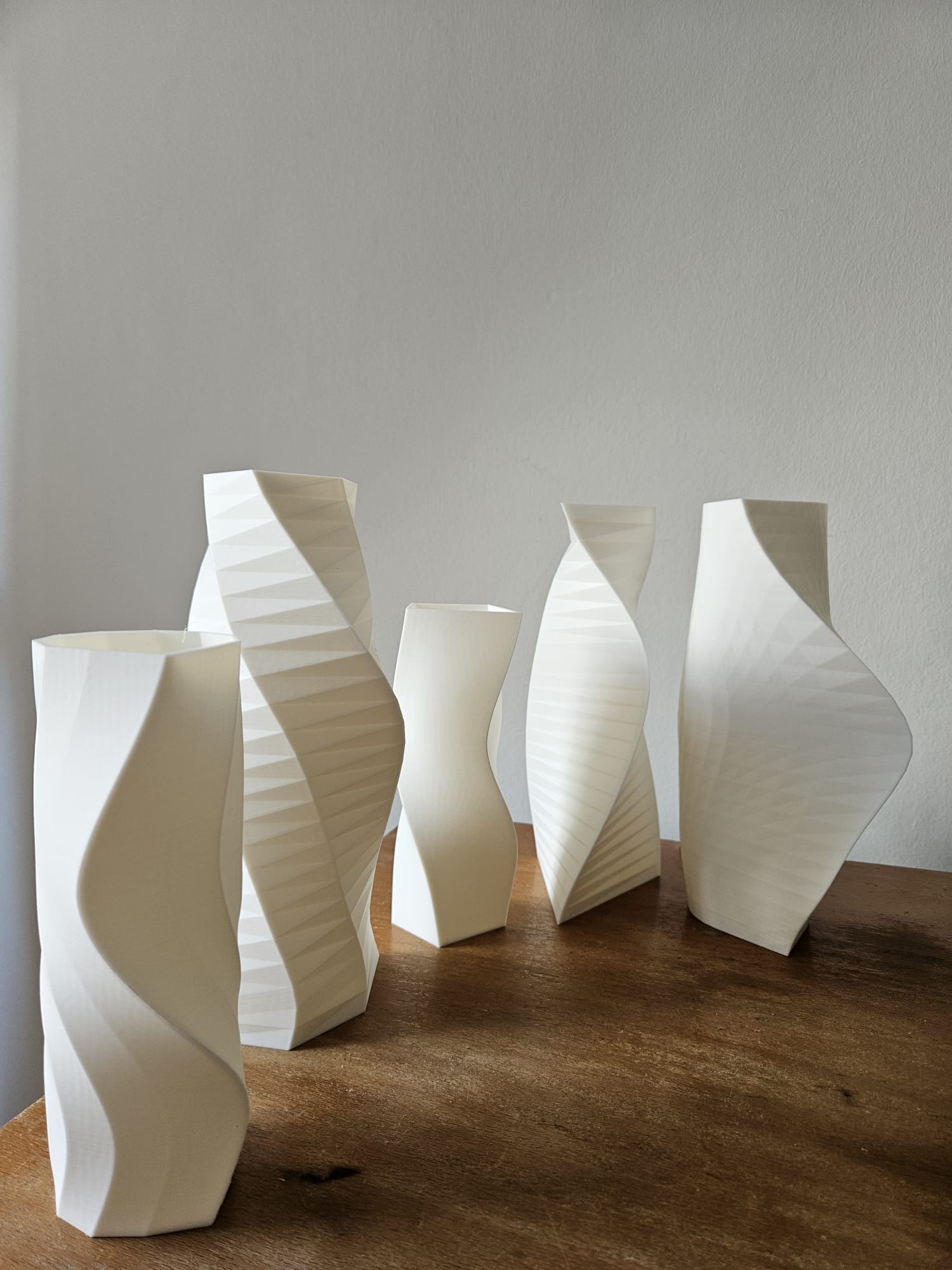
Smooth and structured together
The group shows both surfaces side by side: smooth bodies where the curve carries the form, structured bodies where the facets do.
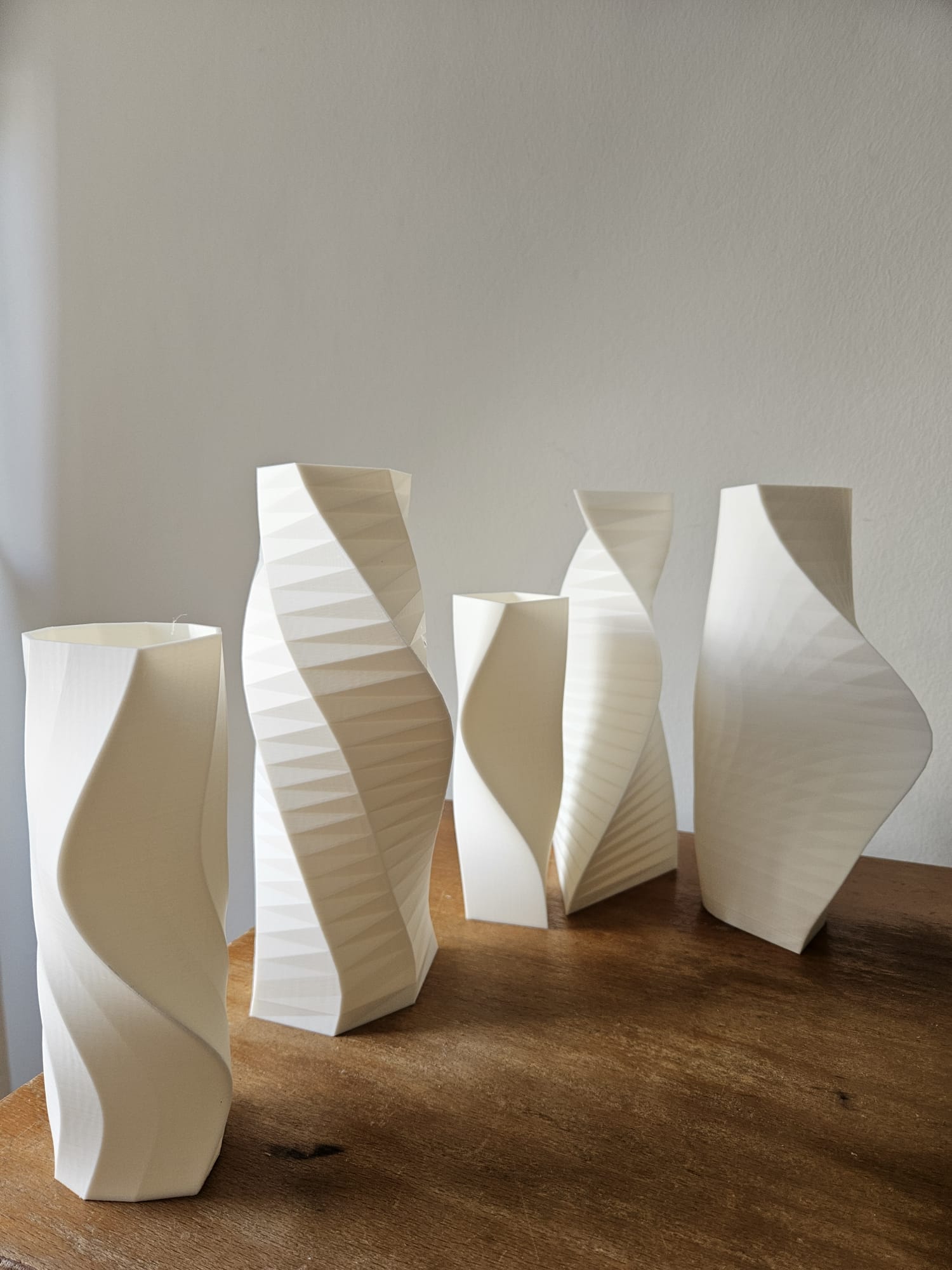
Volume and scale
Records built at full volume and at 75 per cent stand together — each silhouette still belongs to its own day.
Edges
From 3 to 27. Few edges give a sculptural, faceted object; many edges approach a soft, almost turned profile.
Surface
Smooth or structured. The structured surface folds the wind record into visible ridges; the smooth one keeps it as one continuous curve.
Volume
Scalable — the pieces shown are built at 100 % and at 75 % of full volume from the same record.
These five pieces are an exploration, not a catalogue: five different days over Tempelhofer Feld in Berlin-Neukölln, chosen to show how much the wind alone changes the object. The date and record behind each one is documented and available on request.
The object
Made once, for one day.
| Height, first edition | approx. 20 cm |
| Production | Individually made on request |
| Edition | One record, one piece |
| Base edges | 3 to 27, freely chosen |
| Surface | Smooth or structured |
| Volume | Scalable, e.g. 75 % or 100 % |
| Colour | Off-white as shown; not yet specified |
| Documentation | Printed record of place and date |
| Made in | Germany |
Material, sizes and finishes are still being finalised for the first public edition. Write to us and we will tell you exactly where we stand.
The days worth keeping
Every day has a shape. Almost none of them keep it.
On the water
A crossing that finally worked. The session you still describe to people who were not there. The day the forecast was wrong in the right direction. A photograph flattens it. The wind that made it does not.
And anywhere else
The wind was over the wedding, the move, the first morning in a new city. It had a shape then too, whether or not anyone kept it.
How it reads
Bottom to top, hour by hour. The calm morning at the base, the afternoon it turned, the hour it held. You are looking at the day in order.
Places we have checked
Tarifa · Hood River · Cabarete · Jericoacoara · Sylt · Ahrenshoop · Sydney Harbour · Tempelhofer Feld. Somewhere else in mind? Tell us — if the record is good enough to build on we will say so, and if it is not we will say that instead.
For rooms that people wait in
A house can have its own wind. Where the record covers it, we can generate a set of pieces from the weather of that place — related, each its own day. If two days come out close to each other, you will see it while you are choosing.
Tables
Twelve tables, twelve days from one year at one place. Nobody is told; it is noticed.
Entrance and bar
The storm the house is remembered for. Or the day it opened.
Interior and architecture
For architects and designers: one place, several days, each with its record. The building's own weather, on a shelf in it.
Clubs, schools and lofts
Where the wind is the reason people come. A season's days, or the one every member remembers.
Get in touch
Which day would you keep?
We are not selling online yet. We are showing the first series, listening to what people want, and working out what a piece like this should cost. Every message is read and answered by us.
info@windvase.orgHelpful in your message
Your message is used only to answer you.
The studio
A small studio between design, data and making.
WindVase started with a simple question: what would a day of wind look like if it had a body? The tools, the records and the finishing are ours. Technology stays in the background — what matters is that a person recognises their own day in the object.
Studio details, imprint and privacy notice are below. Press and gallery enquiries are welcome at the same address.
Frequent questions
Can you do any place in the world?
Not yet, and we would rather say so. We work from places we have checked, where the record is good enough to build on. Tell us where you have in mind — if we can stand behind the data for it we will say yes, and if we cannot we will say that instead.
How far back can a date go?
Further back than most people ask for — but we check the day before we promise it. The archives are deep and uneven, and wind direction in particular thins out the further back you go. Name the date and we will tell you what the record actually holds.
What does a piece cost?
We are still deciding, honestly. Tell us what you are looking for and we will give you a concrete answer for your case.
Can I see the form before it is made?
Yes. Nothing is produced before you have seen the generated shape and agreed to it.
One day of wind, held in one form. windvase.org
Imprint — information pursuant to § 5 DDG
Volker Edling
Kienitzerstr. 99
12049 Berlin, Germany
Email: info@windvase.org
Responsible for editorial content: Volker Edling, address as above
Privacy notice (GDPR)
Controller: Volker Edling, Kienitzerstr. 99, 12049 Berlin, Germany, info@windvase.org.
Wind data by Open-Meteo.com (ERA5), licensed CC BY 4.0. This site sets no cookies and uses no analytics, no advertising and no social media plug-ins. Fonts and images are served from our own server, so no data is sent to third parties by visiting.
Server logs: our host processes IP address, time, requested file and browser type to deliver and secure the site (Art. 6(1)(f) GDPR), stored for 60 days.
Email enquiries: if you write to info@windvase.org we process your address and message to answer you (Art. 6(1)(b) and (f) GDPR) and delete it once the matter is closed and no retention duty applies.
Your rights: access, rectification, erasure, restriction, objection and data portability (Art. 15–21 GDPR), and complaint to your supervisory authority. Write to info@windvase.org.